




Front page / The canal / Skien locks

Skien locks

Hjelle quay in Skien

Hjelle quay in Skien

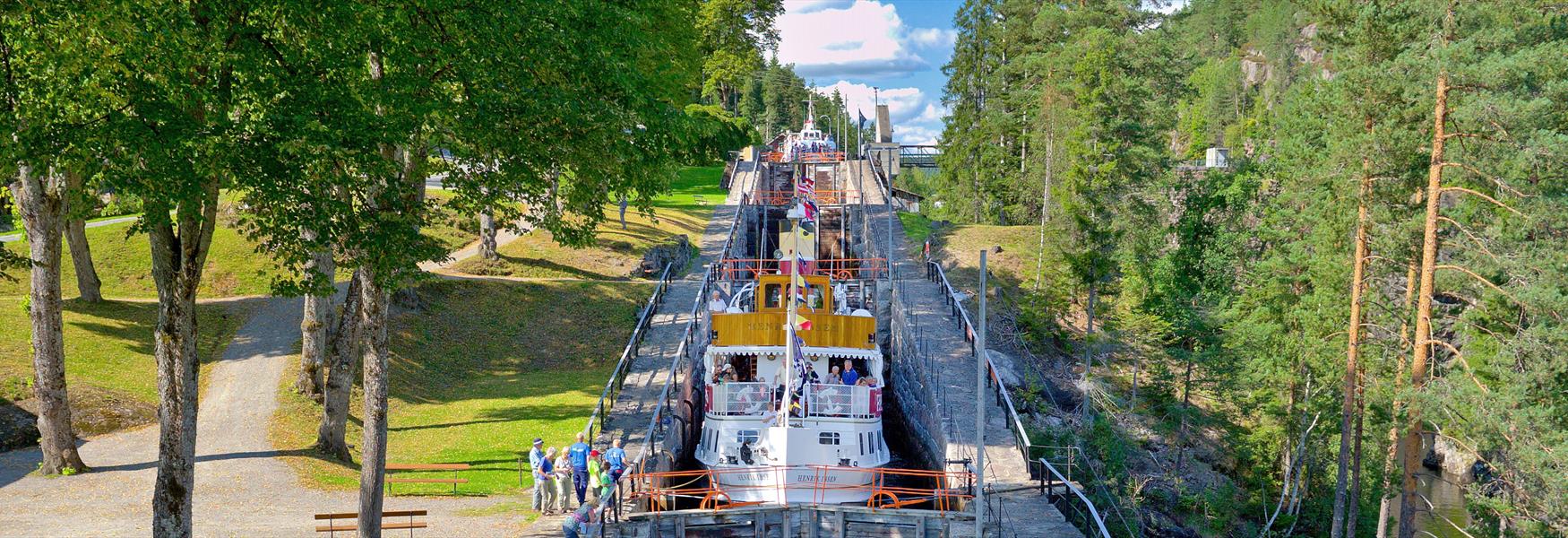
The lock at Skien has one chambre and a lift of five metres. The bridge is from 1980. The tongue of land at Smieøya was the landing stage for the Telemark boats from 1860 to 1900, when the quay at Hjellen was built and taken into use.

At the old landing stage, there is a monument to the log drivers on the Telemark Canal, "Gjennom foss" (Through Waterfalls), created by the sculptor Trygve M. Barstad in 1993.
It was unveiled in 1993 and expresses characteristic aspects of floating timber in the Telemark watercourse, where floating timber to a large extent occurs in narrow waterfalls and ravines.
Union Co. started its paper industry on Smieøya along the canal in 1873. Engineer Benjamin Sewell and others purchased land between the canal and Damfoss. Here they established a pulp mill and a paper mill which were managed by Sewell. The paper mill stands here today, the PM 5 building (Paper machine No. 5) was built after a fire in 1881 and is protected as an landmark of industrial history.

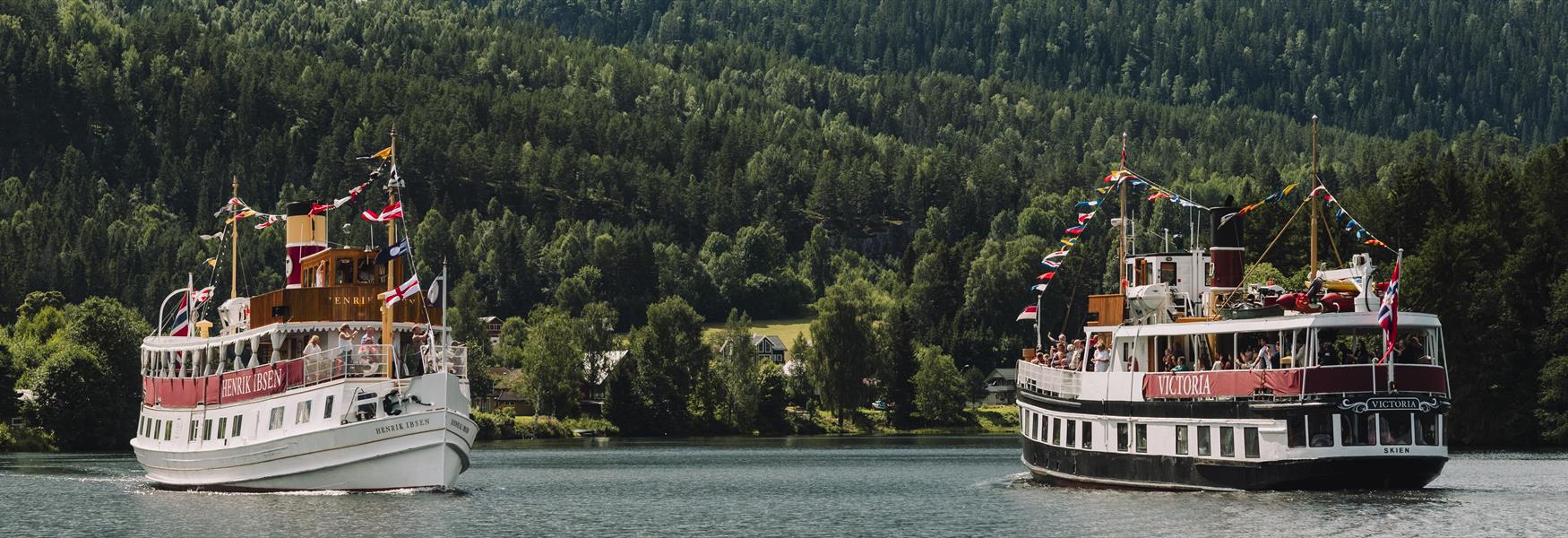
The locks at Ulefoss/Hjelle quay has been the place of departure for the Telemark ships since 1900. On the quay, there is a warehouse with columns of cast-iron and offices of brick, designed by the Porsgrunn architect Halldor Børve. A little way up from the quay are the head offices of the Skien-Telemark Steamship Company, built in 1909 by the local architect Heinrich Karsten. A relief of the company's pride and joy, the passenger steamship "Inland", (1876), graces the facade of the office building. Hjellen, a district of Skien, used to have many hotels to accommodate travellers arriving on the Telemark ships. Nowadays there are daily departures from Hjellen to Dalen during the summer season. A whitewashed brick villa from 1909 visible on the strip of land south of the quay at Hjellen, houses the offices of the Skien Watercourse Log Floaters’.